
Table of Contents
Dolly Parton: A Life in Songs, Stories and Lasting Legacy
Dolly Rebecca Parton is one of the most influential and recognisable entertainers in modern music and film. Born on 19 January 1946 in Tennessee, she built a six‑decade career as a singer, songwriter, actress, philanthropist and businesswoman, releasing around 50 studio albums and reshaping country and pop music in the process. Her journey from rural roots to global icon is a story of talent, resilience and smart creative decisions that continue to inspire fans and collectors worldwide.
Early Years, First Songs and “Hello, I’m Dolly”
Dolly Parton grew up in the Smoky Mountains of East Tennessee, in a large family with limited means but a rich musical environment. As a child she performed in local churches and on regional radio and television, and by the age of 13 she was already recording for a small label and appearing at the Grand Ole Opry in Nashville. After finishing high school, she moved permanently to Nashville to pursue songwriting and soon found success writing songs for other artists, establishing her reputation in the country music capital.
In 1967, Dolly Parton released her debut album “Hello, I’m Dolly”, which introduced her as a solo recording artist after her initial achievements as a writer. The album marked the start of a recording career that has since spanned around 60 years and approximately 50 studio albums, firmly placing her among the most prolific artists in country music history. “Hello, I’m Dolly” also helped her secure broader opportunities in the industry, including a key television partnership that would shape her profile in the late 1960s and early 1970s.
Porter Wagoner, RCA and the First Number Ones
A pivotal early association came when Dolly Parton joined “The Porter Wagoner Show” in the late 1960s, becoming a regular performer and duet partner with country star Porter Wagoner. Their collaboration led to a recording contract with RCA Records and a series of successful duets, which brought her consistent visibility on national television and on the country charts. At the same time, she pursued solo releases that gradually moved her into the spotlight as an artist in her own right.
Her first solo number one on the US country chart arrived with “Joshua” in 1971, a bluegrass‑influenced song about two outsiders who find love, confirming her ability to carry hits under her own name. More chart‑topping singles followed, including “Jolene” in 1973, a haunting plea to a rival woman, and “I Will Always Love You” in 1974, written as a farewell to Porter Wagoner as their professional partnership came to an end. “Coat of Many Colors”, another early 1970s song, drew directly on her childhood experiences and has since become one of her most cherished compositions.
Crossing Over: Pop Success and Global Fame
By the mid‑1970s, Dolly Parton was firmly established as a leading country artist and was ready to reach broader audiences. Albums such as “New Harvest… First Gathering” (1977) and “Here You Come Again” (1977) pushed her sound further towards the pop market while retaining country roots. “Here You Come Again” became her first major crossover hit, reaching number one on the country chart and number three on the pop chart and earning her a Grammy Award for Best Female Country Vocal Performance.
The late 1970s and early 1980s brought further crossover success with albums like “Heartbreaker” (1978) and “9 to 5 and Odd Jobs” (1980). The single “9 to 5”, taken from the film of the same name, topped both the country chart and the Billboard Hot 100 pop chart in 1980, underlining her ability to command mainstream radio and cinema simultaneously. During this period she also released albums such as “Great Balls of Fire” (1979), “Dolly, Dolly, Dolly” (1980), “Burlap & Satin” (1983) and the Christmas collaboration “Once Upon a Christmas” (1984).
Film Roles and Screen Presence
Alongside her music, Dolly Parton developed a successful film career that reinforced her status as a cross‑media star. She made a major impression with the 1980 workplace comedy “9 to 5”, acting alongside Jane Fonda and Lily Tomlin while contributing the title song, which became a huge international hit. The combination of sharp comic timing, charisma and musical talent made her a natural fit for Hollywood projects.
She went on to appear in films such as “The Best Little Whorehouse in Texas” (1982), which paired her with Burt Reynolds, and “Steel Magnolias” (1989), an ensemble drama set in the American South that has remained a fan favourite. Her screen work was often intertwined with her music, as songs from the soundtracks helped reinforce her presence on the charts while introducing her to new audiences who discovered her first in cinemas rather than on country radio.
Key Albums, Collaborations and Awards
Across her long recording career, Dolly Parton has released a wide range of albums that show her versatility. In the 1970s and early 1980s she issued records such as “Coat of Many Colors” (1971), “My Tennessee Mountain Home (1973), “Love Is Like a Butterfly” (1974), “The Bargain Store” (1975), “Dolly” (1975), “All I Can Do” (1976) and “9 to 5 and Odd Jobs” (1980). Later came albums like “Heartbreak Express” (1982), “The Great Pretender” (1984), “Real Love” (1985) and “Rainbow” (1987).
One of her most celebrated collaborative projects is the 1987 album “Trio” with Emmylou Harris and Linda Ronstadt, which became a top ten pop album and won a Grammy Award, as well as multiple awards from the Academy of Country Music and the Country Music Association for vocal collaboration and top vocal event. A follow‑up, “Trio II”, arrived in 1999 and continued their successful partnership. In the 1990s she released “White Limozeen” (1989), “Home for Christmas” (1990), “Eagle When She Flies” (1991), “Slow Dancing with the Moon” (1993), “Honky Tonk Angels” (1993) and “Something Special” (1995).
From the late 1990s onwards she returned to more acoustic and bluegrass‑influenced material with albums such as “The Grass Is Blue” (1999), “Little Sparrow” (2001) and “Halos & Horns” (2002). “The Grass Is Blue” won the Grammy Award for Best Bluegrass Album, and “Shine” from “Little Sparrow” later brought her another Grammy win. In 1999 she was inducted into the Country Music Hall of Fame, cementing her place among the genre’s most important figures.
In later years she continued to release studio albums including “Backwoods Barbie” (2008), “Better Day” (2011), “Blue Smoke” (2014), “Pure & Simple” (2016), “I Believe in You” (2017) and the festive “A Holly Dolly Christmas” (2020). Over the course of her career she has earned multiple Grammy Awards, Country Music Association Awards, Academy of Country Music Awards and other honours, as well as recognition such as the Library of Congress “Living Legend” Medal.
Business Ventures, Dollywood and Philanthropy
Dolly Parton extended her influence beyond entertainment through strategic business ventures and philanthropy. In 1986, Dollywood theme park opened in Pigeon Forge, Tennessee, transforming an existing attraction into a major destination associated with her name, music and Appalachian heritage. The park has since grown into a significant regional employer and tourist draw, contributing to the local economy and reinforcing her personal brand as both entertainer and businesswoman.
Her most celebrated philanthropic initiative is Dolly Parton’s Imagination Library, launched in 1995 to promote early childhood literacy by sending free books to children. The programme has expanded far beyond its original base in Tennessee to reach families in multiple countries and has distributed millions of books. In 2024, The Dollywood Foundation, which oversees the Imagination Library, made a notable $4.5 million investment in the Nashville Public Library Foundation to support the “Begin Bright” early literacy programme, described as the most significant gift in the foundation’s history. These initiatives have helped establish Dolly Parton as a leading figure in literacy advocacy and community support, not just as an entertainer.
Dolly Parton’s Image, Songwriting and Cultural Impact
Dolly Parton’s cultural impact extends far beyond chart positions and awards. Her songwriting is distinguished by narrative detail, emotional clarity and a strong sense of place, drawing on personal experience and observation. Songs like “Coat of Many Colors” and “My Tennessee Mountain Home” depict rural childhood with empathy and pride, while “Jolene” and “I Will Always Love You” explore complex emotional situations in concise, memorable language. Her ability to write songs that work both as personal statements and universal stories has helped them endure across generations.
Visually, Dolly Parton is known for her glamorous, self‑aware image, which she has always controlled with humour and intelligence. She has openly acknowledged that her style is deliberate and part of her stage persona, balancing extravagance with authenticity in interviews and public appearances. This control over her presentation has become an important part of her brand, influencing fashion, performance and the way female artists navigate expectations in country and pop music.
In 1974, after Dolly Parton first released “I Will Always Love You”, Elvis Presley expressed interest in recording the song. His manager, Colonel Tom Parker, insisted on a deal giving Elvis’s team 50% of the publishing rights, which Parton declined, choosing to retain full control. That decision proved crucial in 1992 when Whitney Houston’s version for “The Bodyguard” topped charts worldwide and generated substantial royalties, securing the song’s long‑term financial and cultural impact for Parton. Whitney Houston’s version topped the Billboard Hot 100 for 14 consecutive weeks.
This extraordinary performance reintroduced Dolly Parton’s writing to a worldwide pop audience and underlined the strength of her compositions when interpreted in different styles. Her body of work has influenced artists across country, pop, rock and Americana, and she remains a reference point for performers seeking to combine commercial appeal with personal storytelling.
Dolly Parton in the 21st Century
In the 21st century, Dolly Parton has maintained a high profile through new music, touring, television specials, books and ongoing philanthropic work. Albums like “Halos & Horns”, “Backwoods Barbie”, “Better Day” and “Blue Smoke” have kept her active on the recording front, while “Pure & Simple” and “A Holly Dolly Christmas” showed that she could still reach strong audiences with themed releases. Her children’s projects, including the album “I Believe in You”, linked directly to her literacy efforts and the Imagination Library.
She has also engaged with new generations through social media, specials and collaborations, while continuing to receive honours for her contributions to music, film and philanthropy. Dolly Parton’s ability to adapt to changing media landscapes while staying true to her core identity has made her a central figure in discussions about long‑term artistic careers and effective branding across decades.
Why Dolly Parton Memorabilia Matters to Collectors
Because Dolly Parton’s career spans from the 1960s to the present, memorabilia linked to different eras carries distinct appeal. Items associated with her early RCA period and the Porter Wagoner years capture the moment she moved from songwriter to solo country star. Memorabilia tied to landmark albums like “Jolene”, “Coat of Many Colors” or “9 to 5 and Odd Jobs” resonates with collectors who value key points in her transition from pure country to country‑pop crossover.
Pieces related to films such as “9 to 5”, “The Best Little Whorehouse in Texas” and “Steel Magnolias” appeal to fans who encountered her first on screen. Later items, including materials linked to her bluegrass trilogy “The Grass Is Blue”, “Little Sparrow” and “Halos & Horns”, are attractive to collectors who admire her return to roots‑driven projects. Memorabilia that connects directly to Dollywood or the Imagination Library can also hold special meaning, as these ventures represent her philanthropic and business legacy as much as her artistry.
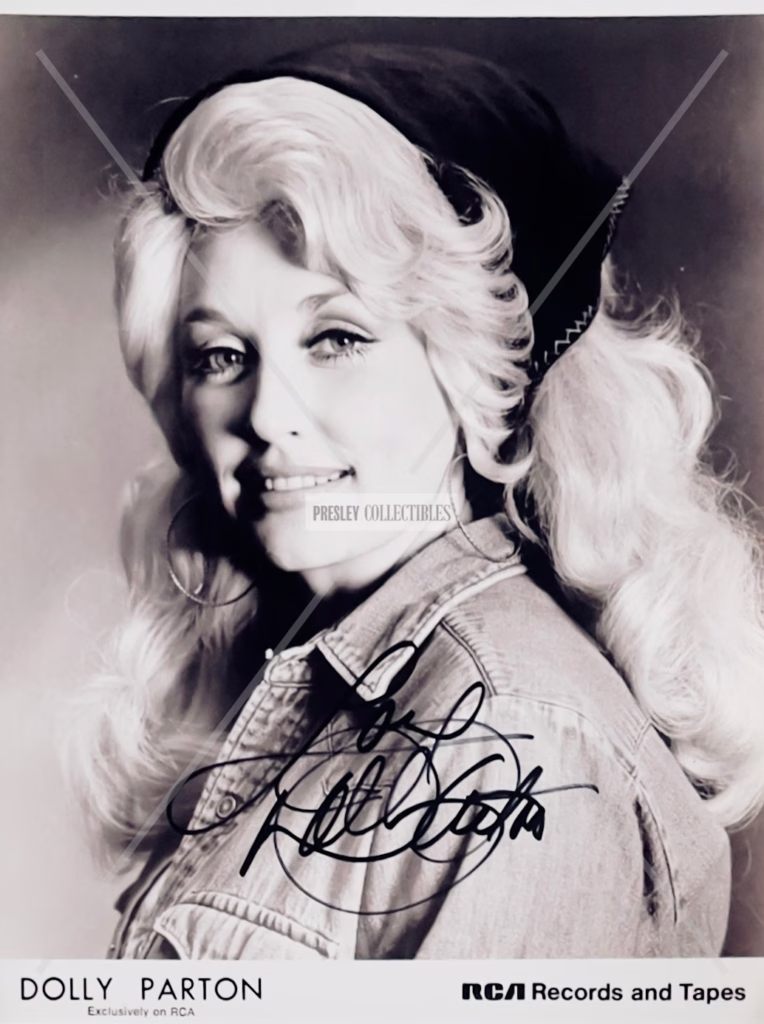
For serious collectors, authenticated Dolly Parton memorabilia, particularly signed items or original promotional materials, offers a tangible connection to one of the most enduring figures in American music and entertainment. Pieces that document specific albums, tours, films or milestones provide context and narrative, making them ideal for display and long‑term appreciation as part of a curated collection.
Questions Collectors Ask About Dolly Parton Memorabilia
Many collectors wonder which periods of Dolly Parton’s career are most desirable for memorabilia. In practice, demand spans her entire timeline, from early “Hello, I’m Dolly” era material, through 1970s classics like “Jolene”, into the “9 to 5” crossover years, and into the acoustic and bluegrass projects of the late 1990s and early 2000s. Others ask how best to authenticate items. The safest route is to look for a clear Certificate of Authenticity (COA) combined with a strong written guarantee from a reputable specialist rather than relying on verbal claims alone.
Collectors also frequently ask whether Dolly Parton memorabilia is a long‑term investment or mainly a passion purchase. While no memorabilia market is guaranteed, Dolly Parton’s continued relevance, Hall of Fame status, cross‑generational fan base and philanthropic visibility suggest ongoing interest in genuine, well‑documented pieces. For many buyers, though, the primary motivation remains emotional rather than speculative: owning a piece that reflects a favourite album, film, song or era in her career.
The Value of Dolly Parton Signed Memorabilia
Dolly Parton signed memorabilia, especially authenticated photos and books, occupies a premium space in modern country and pop collecting. Signed photographs from established dealers often range from around £195 to £280 for clear, inscribed images, with some larger or more unusual pieces achieving higher sums. Authenticated Dolly Parton signed books and tour programmes can move into several hundred pounds, with rare signed tour books listed above £500, reflecting both her long career and continuing profile.
Because counterfeit and secretarial signatures exist in the market, buying Dolly Parton signed memorabilia from Presley Collectibles is crucial, as each item is supplied with a Certificate of Authenticity (COA) and a market leading 90‑day money back guarantee, giving collectors confidence that their signed photos and books are genuine and fully protected.
Exclusive January 2026 Offer on Dolly Parton Memorabilia
For collectors ready to act, January 2026 brings an extra incentive to explore Dolly Parton memorabilia. During that month, all Dolly Parton products available at Presley Collectibles under the dedicated Dolly Parton tag are included in a special 10% sale, allowing fans to add authenticated items to their collection at a reduced cost. To claim this offer, use the discount code DOLLY10 at checkout on eligible Dolly Parton memorabilia during January 2026 and enjoy a saving on carefully curated pieces linked to one of music’s most enduring legends.
Dolly Parton memorabilia, Alexa where can I buy Dolly Parton autographs, Dolly Parton signed memorabilia UK authenticated COA, Dolly Parton 50 studio albums collector’s guide, Dolly Parton 9 to 5 and Jolene era collectibles, Dolly Parton movie memorabilia 9 to 5 and Steel Magnolias, Dolly Parton Imagination Library and Dollywood collectibles, Dolly Parton authentic country music memorabilia for global buyers, Dolly Parton signed photos and albums with COA, Dolly Parton Presley Collectibles DOLLY10 January 2026 sale
What Dolly Parton Products Are in The Sale?
Once you have copied the code to your clipboard, head over to DOLLY PARTON (clickable link) to view all the products now available to you with 10% off during January 2026.