
Table of Contents
Billy Idol Bio: Who Is Billy Idol?
Quick answer: Billy Idol is an English rock singer and songwriter, born William Broad on 30 November 1955. He fronted punk band Generation X, then became a global solo star with hits such as “White Wedding”, “Rebel Yell” and “Eyes Without a Face”.
Billy Idol is a British-born rock singer, songwriter and actor. He first made his name as the snarling frontman of punk band Generation X. He then became one of the biggest solo stars of the 1980s.
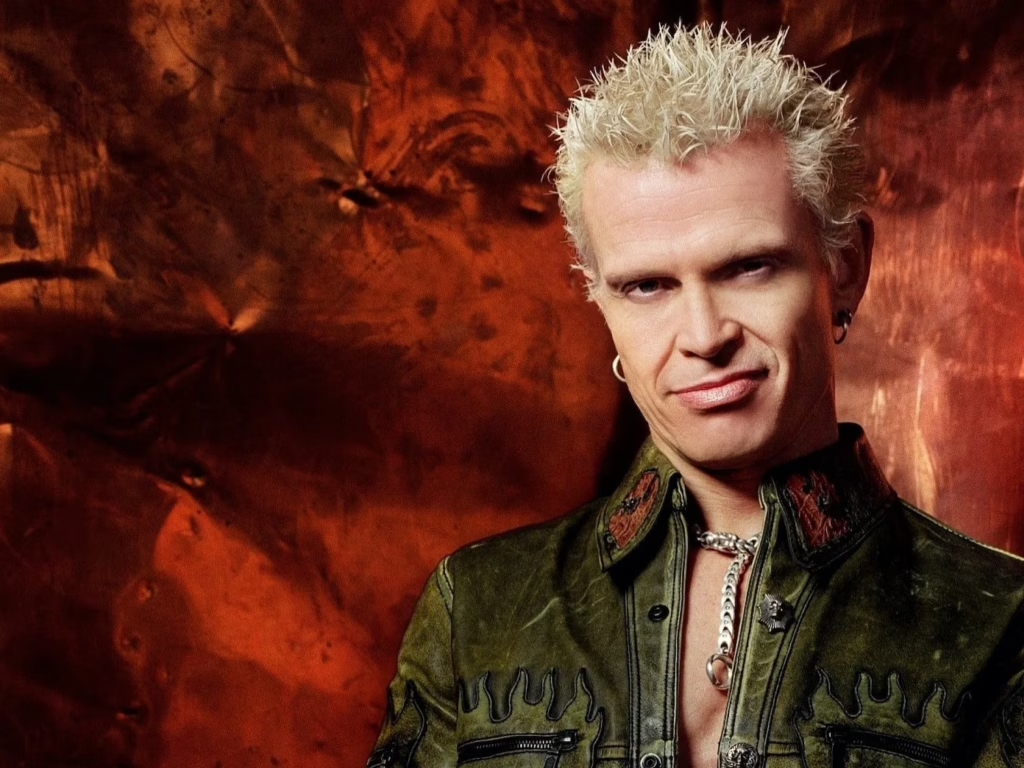
His bleached spiky hair, curled lip and studded leather jackets became symbols of the MTV age. His songs still fill dance floors and radio playlists today. Few rock stars stay relevant for nearly 50 years. Idol has done exactly that.
2026 is a landmark year for him. He is being inducted into the Rock and Roll Hall of Fame. He has released an acclaimed documentary film. He has also received the American Music Awards Lifetime Achievement Award. This Billy Idol bio explores his life, his music and his lasting influence on rock and pop culture.
Presley Collectibles has traded in signed music and entertainment memorabilia for over 40 years. We know how much Idol means to collectors around the world. That is why we are celebrating his big year with a special November sale. Read on to the end of this post for the details.
Billy Idol Key Facts at a Glance
- Real name: William Michael Albert Broad
- Born: 30 November 1955, Stanmore, Middlesex, England
- Age in November 2026: 70, turning 71 on 30 November
- Early bands: Chelsea and Generation X
- Debut single with Generation X: “Your Generation” (1977)
- Best-known songs: “White Wedding”, “Rebel Yell”, “Eyes Without a Face”, “Flesh for Fantasy”, “Dancing with Myself” and “Sweet Sixteen”
- Longtime guitarist and collaborator: Steve Stevens
- Breakthrough solo album: Rebel Yell (1983)
- Latest studio album: Dream Into It (2025)
- Documentary: Billy Idol Should Be Dead, streaming on Hulu since 26 March 2026
- 2026 honours: Rock and Roll Hall of Fame induction and American Music Awards Lifetime Achievement Award
Billy Idol Early Life: From Stanmore to the London Punk Scene
William Michael Albert Broad was born on 30 November 1955 in Stanmore, Middlesex. Stanmore is a suburb in the north-west of London. His family moved to the United States in 1958, when he was a toddler. They settled on Long Island, New York.
The family returned to England in 1961. They made their home in Sussex, where young William went to school. He was bright but restless. After school, he studied English at the University of Sussex. He left after a year to chase a different dream.
How Did Billy Idol Get His Stage Name?
Idol has said that his name came from a school report. A teacher described him as idle. William liked the sound of it. He changed the spelling and kept the attitude. The name suited a young man with big ambitions and a rebellious streak.
Billy Idol and the Bromley Contingent
In 1976, London was alive with punk. The Sex Pistols were shaking up British music. Idol became part of their early circle of followers, known as the Bromley Contingent. The group included Siouxsie Sioux and Steve Severin.
The Bromley Contingent helped to shape punk fashion and attitude. Idol absorbed it all. He learned how to command attention in a crowded room. He also learned that image and music work best together.
Idol then played guitar in a short-lived band called Chelsea. Singer Gene October and bassist Tony James were in the line-up. Idol and James soon left to form their own group.
Billy Idol and Generation X
The new band was called Generation X. The name came from a 1964 book about British youth. Idol became the lead singer, with Tony James on bass. The group signed to Chrysalis Records in 1977.
Their debut single, “Your Generation”, arrived that year. It captured the restless mood of young Britain. Generation X released three albums between 1977 and 1981. The self-titled debut, Generation X, came out in 1978. Valley of the Dolls followed in 1979. The final album, Kiss Me Deadly, arrived in 1981.
The band appeared on Top of the Pops and built a loyal following. Their punk sound came with real pop hooks. That set them apart from many rougher rivals. “King Rocker” and “Dancing with Myself” remain fan favourites to this day.
Idol also developed his famous look during these years. Bleached blond spikes, a curled lip and sharp stagecraft marked him out. He looked like a star long before the world knew his name.
Generation X split in 1981. Idol was ready for a bigger stage. He packed his bags and headed for New York City.
Billy Idol Solo Career: New York, MTV and Rebel Yell
Idol arrived in New York in 1981. The city suited him. It was loud, glamorous and full of energy. He signed with manager Bill Aucoin, who had guided the career of rock band Kiss. Aucoin saw real star potential in the young Englishman.
Idol also met guitarist Steve Stevens. The pair clicked at once. Stevens brought flair, speed and a love of big riffs. Producer Keith Forsey completed the team. Together, they built a sound that mixed punk attitude with polished pop and rock.
What Was Billy Idol’s First Solo Album?
Idol’s first solo release was the Don’t Stop EP in 1981. His debut solo album, Billy Idol, followed in 1982. It included “Hot in the City” and “White Wedding”. The album went platinum in the United States and made Idol a name on American radio.
Idol has said that “White Wedding” was inspired by his sister’s wedding. The song mixes dark humour with a driving, urgent beat. It later became his signature tune.
Billy Idol and the MTV Revolution
MTV launched on 1 August 1981. The new channel needed striking visuals. Idol had them in abundance. His videos were in heavy rotation. The camera loved his sneer, his swagger and his sharp stage presence.
Within a few years, he was one of the most recognisable faces on television. Music fans did not just hear Billy Idol. They saw him, and they remembered him. Few artists of the era understood the power of the music video better.
The Rebel Yell Album
Rebel Yell arrived in November 1983. It became his defining record. The album reached number six on the US Billboard 200. It sold more than three million copies in America.
The title track, “Rebel Yell”, is a roaring anthem co-written by Idol and Stevens. It remains a highlight of every live show. “Flesh for Fantasy” added a moody, synth-driven edge. Both songs became fan favourites.
“Eyes Without a Face” showed a softer side. The title came from a 1960 French horror film. The song features a flamenco-style guitar solo from Stevens. It reached number four on the US Billboard Hot 100 and became one of Idol’s most loved ballads.
The success soon crossed the Atlantic. In 1985, a re-release of “White Wedding” gave Idol a top ten hit in the United Kingdom. The boy from Stanmore had become a transatlantic star.
By the mid-1980s, Idol had changed the shape of rock. He proved that punk energy could sit beside pop hooks. He also proved that a great look can make a great song unforgettable. His next chapter would take him to even greater heights.
Billy Idol in the Late 1980s: Whiplash Smile and Global Fame
By 1985, Billy Idol was a bona fide superstar. That year he released Vital Idol, a collection of remixes of his biggest tracks. It kept his songs in the clubs and on the dance floor. Fans loved the harder, bolder versions.
Idol then turned his attention to a new studio album. He wanted a bigger, glossier sound. He also wanted to prove that his success was no fluke.
Whiplash Smile and “To Be a Lover”
Whiplash Smile arrived in October 1986. It reached the top ten of the US album chart and went platinum. The record leaned more heavily on synthesisers. It still carried plenty of Idol’s trademark swagger.
The lead single, “To Be a Lover”, was a cover of a 1968 soul song by William Bell. Idol turned it into a pounding rock anthem. It reached number six on the US Billboard Hot 100. Fans around the world sang along.
“Sweet Sixteen” was a different kind of song. It was a tender ballad with a haunting melody. The single reached the top 20 in both the United Kingdom and the United States. It showed that Idol could do more than snarl.
Billy Idol’s Greatest Hits of the 1980s
The 1980s were Idol’s golden decade. These are the songs most fans remember best:
- “Dancing with Myself”
- “White Wedding”
- “Rebel Yell”
- “Eyes Without a Face”
- “Flesh for Fantasy”
- “To Be a Lover”
- “Sweet Sixteen”
- “Mony Mony”
Idol’s rowdy cover of “Mony Mony” deserves a special mention. The original was a 1968 hit for Tommy James and the Shondells. Idol turned it into a bar-room singalong. It became a party staple at weddings, clubs and sporting events.
The Billy Idol Look
Idol’s style was as famous as his music. Spiky bleached hair, black leather and studs became his uniform. His clenched-fist salute became a trademark on stage. Countless fans copied his look.
Music fashion has never been the same since. Today, the leather-jacket-and-spikes look is still linked to Billy Idol. It remains one of the most recognisable images in rock history.
Idol and Steve Stevens Part Ways
Idol and Steve Stevens parted ways around 1987. Stevens went on to other projects. These included playing guitar on Michael Jackson’s “Dirty Diana”. Idol carried on as a solo star with new collaborators.
The pair would not be apart for ever. Their musical bond ran deep. It would return in a big way in later years. For now, Idol faced a new decade. It would test him as never before.
Billy Idol in the 1990s: Crash, Cyberpunk and Survival
The 1990s began with a shock. Idol was at the top of the rock world. Then fate intervened. The decade would become one of the toughest of his life.
What Happened to Billy Idol in 1990?
In early 1990, Idol was involved in a serious motorcycle accident in Los Angeles. He suffered major leg injuries. His recovery was long and painful. Many wondered whether he would ever perform again.
Idol refused to give up. He returned to the studio while still recovering. He also became a symbol of rock-and-roll resilience. It would not be the last time he cheated fate.
Charmed Life and “Cradle of Love”
Idol released the album Charmed Life in 1990. It went platinum in the United States. The standout track was “Cradle of Love”. It featured in the film The Adventures of Ford Fairlane and became a US top ten hit.
The video for “Cradle of Love” was directed by David Fincher. He later became a famous film director. The clip received heavy play on MTV. It showed that Idol could still command the screen after his accident.
Cyberpunk: An Album Ahead of Its Time
In 1993, Idol released Cyberpunk. It was a concept album inspired by the dawn of the digital age. Idol was fascinated by computers and the internet. He was one of the first major rock stars to embrace the online world.
The album divided critics and fans. It did not match the sales of his earlier records. Time has been kinder to it, though. Some fans and critics now see Cyberpunk as a bold record that arrived years early.
Billy Idol’s Darker Years
The mid-1990s were difficult. Idol has spoken openly about his struggles with drug use. He survived a near-fatal overdose in 1994. He has also said he is lucky to be alive. His documentary, Billy Idol Should Be Dead, takes its title from those close calls.
Idol never hid from his past. His honesty has made him a respected figure. Many fans admire him as much for his survival as for his songs.
A New Audience Through The Wedding Singer
Idol stepped back from the spotlight for a time. He then returned in a surprising way. In 1998, he appeared as himself in the comedy film The Wedding Singer. He played a small but memorable part alongside Adam Sandler.
The cameo introduced Billy Idol to a new generation. Younger viewers saw the spiky hair and the famous sneer. Many went away to look up his music. His back catalogue found a fresh audience.
Reunion with Steve Stevens
In 2001, Idol appeared on VH1 Storytellers. Steve Stevens rejoined him. The old partnership picked up exactly where it left off. A greatest hits collection also appeared in 2001. Fans were thrilled.
The reunion proved to be a turning point. Idol and Stevens have worked together ever since. Their friendship and musical chemistry would power the next stage of his career.
Billy Idol’s Comeback: From Devil’s Playground to Dream Into It
The new century brought a creative rebirth. Idol had survived the 1990s. Now he wanted to prove that he still had plenty to say. He did so with a run of new music and a loyal live following.
Devil’s Playground (2005)
Idol released Devil’s Playground in 2005. It was his first studio album in 12 years. Steve Stevens was back on guitar, and the sound was heavier and harder. Longtime fans welcomed it as a return to form.
The record showed a mature, reflective Idol. He still had the snarl. He now also had stories to tell. The tour that followed confirmed that his live show was as powerful as ever.
Happy Holidays (2006)
In 2006, Idol surprised fans with a festive album, Happy Holidays. It offered a rock-and-roll twist on seasonal favourites. The record showed his playful side and his sense of humour. It remains a fun curiosity for collectors.
Kings & Queens of the Underground (2014)
Idol returned in 2014 with Kings & Queens of the Underground. It was his first studio album in nearly a decade. Idol and Stevens wrote much of it together. The songs looked back on his life, his mistakes and his survival.
That same year, Idol published his memoir, Dancing with Myself. The book traced his journey from suburban England to rock stardom. It drew praise for its honesty. Fans finally heard the full story in his own words.
The Roadside and The Cage
Idol kept releasing music in shorter bursts. The Roadside EP arrived in 2021. The Cage EP followed in 2022. Both offered fresh songs alongside his live schedule. They proved that Idol still enjoyed the creative process.
Dream Into It (2025)
In early 2025, Idol released Dream Into It. It was his first full-length studio album since 2014. The record works as a concept album that traces events in his life and career. It features guest appearances from artists across rock, pop and country.
The album invites fans to hear his life story set to music. Idol and Stevens sound in strong form throughout. The record also set the stage for an extraordinary 2026.
Still Touring at 70
Idol never stopped performing. His 2025 tour took him across North America, South America and Europe. He sold out venues on three continents. His live shows still feature the fist pumps, the sneer and the big guitar riffs.
Few rock stars of his generation can match that stamina. Idol turned 70 in 2025. He still delivers the kind of high-energy show that fans expect. That reputation is a big part of his enduring appeal.
Billy Idol in 2026: Hall of Fame, Hulu Documentary and Lifetime Achievement
2026 is shaping up to be one of the best years of Billy Idol’s career. Nearly 50 years after he first hit the stage, the honours are rolling in. Here is what has happened so far, and what is still to come.
Is Billy Idol in the Rock and Roll Hall of Fame?
Yes. Billy Idol has been elected to the Rock and Roll Hall of Fame as part of the Class of 2026. He was nominated in 2025 and again in 2026. The inductees were revealed on 13 April 2026 during a special episode of American Idol.
Steve Stevens will be inducted alongside him. The 2026 class also includes Phil Collins, Iron Maiden, Joy Division and New Order, Oasis, Sade, Luther Vandross and Wu-Tang Clan.
The induction ceremony takes place on Saturday 14 November 2026 at the Peacock Theater in Los Angeles. It will air on ABC and Disney+ in December. The day before, on Friday 13 November, the city of Los Angeles will mark “Billy Idol Day” at City Hall. Idol and Stevens will be honoured by councilwoman Monica Rodriguez.
Billy Idol Should Be Dead: The Hulu Documentary
The documentary Billy Idol Should Be Dead began screening at film festivals in 2025. It arrived on Hulu on 26 March 2026. Director Jonas Åkerlund made the film, and Live Nation Studios produced it.
The film traces Idol’s life from punk pioneer to rock icon. It looks at the highs, the lows and the close calls. Critics have praised its honest portrait. It is essential viewing for any fan.
American Music Awards Lifetime Achievement Award
In May 2026, Idol received the Lifetime Achievement Award at the 52nd American Music Awards. He also performed a medley of his hits on the night. The honour recognised nearly five decades of music and influence.
Idol on Tour in 2026
Idol hit the road again this summer. His It’s a Nice Day to… Tour Again! trek covered the United States from July to September. He also played the Ohana Festival, which is curated by Pearl Jam singer Eddie Vedder.
From 28 August to 5 September, he played five nights at the Fontainebleau Las Vegas. The residency was called Billy Idol: Hot in the City. It took place at the BleauLive Theater.
A Birthday to Remember
Idol turns 71 on 30 November 2026. That date closes a year of triumphs. His new compilation, Idolize Yourself: The Very Best of Billy Idol, is also available for fans who want his hits in one place. For collectors, there has never been a better moment to celebrate Billy Idol.
Billy Idol’s Legacy: Why He Still Matters
Billy’s story is one of reinvention. He began as a face in the crowd at early Sex Pistols gigs. He became a punk frontman, then a global star, then a survivor. Few artists have travelled so far and kept their spark.
How Did Billy Idol Change Rock Music?
Idol helped to bridge the gap between punk and pop. He took the speed and attitude of punk and added strong melodies. The result was a sound that radio could play and fans could shout along to.
He also understood the power of the music video. In the early days of MTV, he gave the channel a face that viewers could not ignore. His videos helped to define how rock stars looked on screen in the 1980s.
The partnership with Steve Stevens added another layer. Stevens is a creative and technically gifted guitarist. His playing gave Idol’s songs a distinctive edge. Together they produced a catalogue that still sounds fresh.
An Image That Never Faded
Idol’s look has outlived the decade that made it. Spiky bleached hair, a curled lip and black leather still say “rock star” to people everywhere. Fans dress as Billy Idol at parties, festivals and Halloween events. His image has become a kind of shorthand for rebellious cool.
His style also shows that image and substance can go together. Idol had the look, but he also had the songs. That balance is rare. It explains why he has outlasted many of his rivals.
Songs That Live On
Idol’s best-known songs remain popular on radio, streaming services and playlists. “White Wedding” and “Dancing with Myself” are party favourites. “Rebel Yell” is a stadium singalong. “Eyes Without a Face” still draws fans to the slower moments of his live set.
New listeners keep finding them. Parents share the music with children. Younger fans discover the songs through film, television and online clips. That steady flow keeps Idol’s catalogue alive.
Why Do Collectors Love Idol Memorabilia?
Idol sits at the heart of the 1980s music story. Fans who grew up with MTV want a piece of that era. Many treasure signed photographs, records, posters and concert items linked to his career.
Collectors also value the authenticity of a genuine signature. An autograph connects the owner to a living legend. With his Hall of Fame induction approaching, interest in Billy Idol memorabilia is stronger than ever. At Presley Collectibles, we see that passion every day.
Idol Timeline: Key Dates and Achievements
This timeline sums up the key moments in the life and career of Billy Idol.
- 1955: William Michael Albert Broad is born on 30 November in Stanmore, Middlesex.
- 1958: His family moves to Long Island, New York.
- 1961: The family returns to England and settles in Sussex.
- 1976: Idol joins the London punk scene and helps to form Generation X.
- 1977: Generation X sign to Chrysalis Records and release “Your Generation”.
- 1978: Generation X release their self-titled debut album.
- 1979: The band release their second album, Valley of the Dolls.
- 1981: Generation X release Kiss Me Deadly and split. Idol moves to New York and releases the Don’t Stop EP.
- 1982: Idol releases his debut solo album, Billy Idol.
- 1983: The album Rebel Yell arrives in November.
- 1984: “Eyes Without a Face” reaches number four on the US Billboard Hot 100.
- 1985: Vital Idol is released. A re-release of “White Wedding” becomes a UK top ten hit.
- 1986: Whiplash Smile is released. “To Be a Lover” reaches number six in the United States.
- 1990: Idol survives a serious motorcycle accident and releases Charmed Life.
- 1993: The concept album Cyberpunk is released.
- 1998: Idol appears as himself in The Wedding Singer.
- 2001: Idol appears on VH1 Storytellers and reunites with Steve Stevens.
- 2005: Devil’s Playground is released.
- 2014: Kings & Queens of the Underground and the memoir Dancing with Myself are released.
- 2021 and 2022: The Roadside EP and The Cage EP are released.
- 2025: Dream Into It is released. Idol receives his first Rock and Roll Hall of Fame nomination.
- 2026: Billy Idol Should Be Dead arrives on Hulu on 26 March. The Hall of Fame class is announced on 13 April. Idol receives the American Music Awards Lifetime Achievement Award in May. He plays five nights in Las Vegas from 28 August to 5 September. Los Angeles marks Billy Idol Day on 13 November. The Hall of Fame induction follows on 14 November. Idol turns 71 on 30 November.
Billy Idol FAQs: Your Questions Answered
Who is Billy Idol?
Billy Idol is an English rock singer, songwriter and actor. He began his career in the punk band Generation X. He then became a major solo star in the 1980s with songs such as “White Wedding” and “Rebel Yell”.
What is Billy Idol’s real name?
Billy Idol’s real name is William Michael Albert Broad. He chose the stage name Idol after a school report described him as idle. He changed the spelling to create a rock-and-roll identity.
How old is Billy Idol?
Billy Idol was born on 30 November 1955. He is 70 years old at the time of writing. He turns 71 on 30 November 2026.
Where was Billy Idol born?
Billy Idol was born in Stanmore, Middlesex, in the north-west of London. His family moved to New York in 1958 and returned to England in 1961. He grew up in Sussex.
What bands was Billy Idol in?
Billy Idol played in the short-lived punk band Chelsea. He then formed Generation X with bassist Tony James. After Generation X split in 1981, he launched his solo career in New York.
What are Billy Idol’s biggest songs?
Billy Idol’s biggest songs include “White Wedding”, “Rebel Yell”, “Eyes Without a Face”, “Flesh for Fantasy” and “Dancing with Myself”. Other favourites are “To Be a Lover”, “Sweet Sixteen”, “Cradle of Love” and his cover of “Mony Mony”.
What was Billy Idol’s biggest album?
Rebel Yell, released in 1983, is Idol’s best-known album. It reached number six on the US Billboard 200. It sold more than three million copies in the United States.
Who is Steve Stevens?
Steve Stevens is an American guitarist and Idol’s long-time collaborator. He co-wrote hits such as “Rebel Yell” and played the flamenco-style solo on “Eyes Without a Face”. He is being inducted into the Rock and Roll Hall of Fame alongside Idol.
What is Billy Idol Should Be Dead?
Billy Idol Should Be Dead is a feature-length documentary about his life and career. Jonas Åkerlund directed it, and Live Nation Studios produced it. It has been streaming on Hulu since 26 March 2026.
Is Billy Idol in the Rock and Roll Hall of Fame?
Yes. Billy is part of the Rock and Roll Hall of Fame Class of 2026. The induction ceremony takes place on 14 November 2026 at the Peacock Theater in Los Angeles. It will air on ABC and Disney+ in December.
Is Billy Idol still touring?
Idol toured the United States in summer 2026. He also played a five-night Las Vegas residency in late August and early September. Check his official channels for news of future dates.
Where can I buy Billy Idol memorabilia?
Presley Collectibles is a UK-based specialist in signed music and entertainment memorabilia. We have traded for over 40 years and ship to collectors worldwide. Throughout November 2026, readers can enjoy 10% off all Idol memorabilia.
Celebrate Billy Idol This November with 10% Off Memorabilia
Billy Idol’s story is one of rebellion, survival and sheer talent. From the punk clubs of 1976 London to the Rock and Roll Hall of Fame in 2026, he has earned his place in music history. November is a perfect time to celebrate that journey. His Hall of Fame induction takes place on 14 November. His 71st birthday follows on 30 November.
Presley Collectibles is a specialist in signed music and entertainment memorabilia, with over 40 years of trading experience. We believe that every great career deserves a place on your shelf. Whether you have followed Idol since the Generation X days or discovered him through his new documentary, we have something for you.
Special November offer: Presley Collectibles is offering readers of this post a 10% discount on all Billy Idol memorabilia throughout November 2026. Simply click on the button below and use the code at checkout. The offer runs from 1 November to 30 November 2026. Visit the Presley Collectibles website today and add a genuine piece of rock history to your collection.
10% off all Billy Idol memorabilia. Ends 30 November 2026.
Billy Idol biography, Billy Idol memorabilia, Billy Idol signed memorabilia, Billy Idol Rock and Roll Hall of Fame 2026, Billy Idol Should Be Dead documentary, Generation X Billy Idol, Billy Idol Steve Stevens, Who is Billy Idol?, How old is Billy Idol?, What is Billy Idol’s real name? What are Billy Idol’s biggest songs?, Is Billy Idol in the Rock and Roll Hall of Fame?, Where can I buy Billy Idol memorabilia in the UK?, Billy Idol collectables sale November 2026,